
The Real Reason Some Kids Become Targets (And What Actually Changes It)
There's a moment most parents recognize.
Their child walks into a room full of other children and something shifts. Their shoulders pull in slightly. Their eye contact drops. They move to the edge of the group instead of the middle of it. They wait to be included rather than including themselves.
It lasts maybe three seconds. Most people don't notice it.
But other children notice it.
That moment, that almost invisible physical signal, is where the bullying conversation actually starts. Not with the bully. Not with the target. With the identity that hasn't been fully formed yet.
What Most People Get Wrong About Bullying
The conversation around bullying tends to focus on behavior. What to say when someone confronts your child. How to tell a trusted adult. What the bystander should do. Those conversations have their place.
But they're treating symptoms.
The child who gets targeted consistently, across different environments, different schools, different social groups, isn't experiencing bad luck. They're communicating something through how they carry themselves that their environment is responding to. And the child doing the targeting is doing the same thing from the other direction: reaching for dominance because they haven't found a legitimate way to feel capable and strong.
Both situations share the same root. An identity that hasn't been tested, forged, and confirmed yet.
You can't script your way out of that. You have to build your way out of it.
What a Forged Identity Actually Looks Like
There's a version of confidence that parents can see in children who have genuinely earned something hard.
It's not loud. It doesn't announce itself. It shows up in the way a child holds eye contact without challenging anyone. The way they respond to pressure without collapsing or escalating. The way they walk into unfamiliar rooms like they belong there, not because they were told they belong, but because they've proven to themselves that they can handle whatever the room brings.
That's what we call silent confidence at Transform.
And it doesn't come from reassurance. It doesn't come from positive reinforcement alone, or from being told how capable they are, or from a school assembly about kindness. It comes from being challenged under real conditions, struggling through it, and arriving on the other side with evidence.
The evidence is everything. A child who has been challenged, who has failed in front of people and kept going, who has been physically and mentally pushed and discovered they're stronger than they thought, that child carries a completely different presence than a child who has only ever been comfortable.
Other children read that presence immediately. The social dynamics in a room shift around a child who has genuinely forged themselves. There's nothing to exploit, nothing uncertain to test, nothing soft to push against.
What the Mat Does That Nothing Else Does
Most environments in a child's life are designed to minimize discomfort. Schools manage difficulty carefully. Organized sports often prioritize participation and positivity over genuine challenge. Screens eliminate discomfort entirely.
The mat does the opposite on purpose.
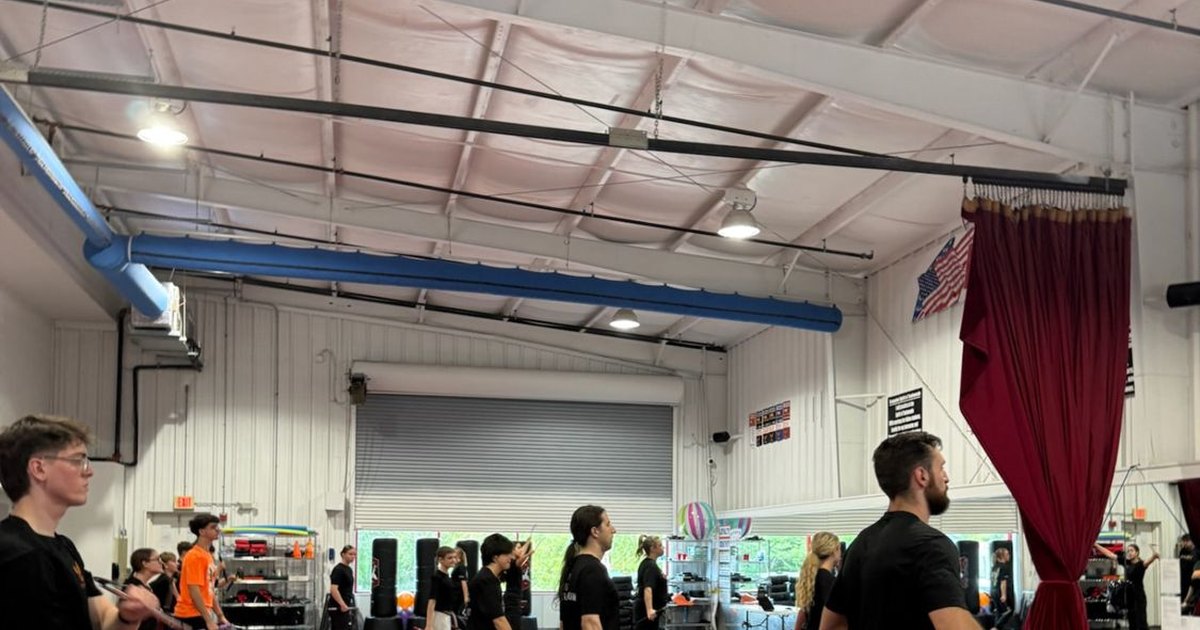
Every class at Transform puts a child in situations where they are uncertain, where the outcome isn't guaranteed, where they have to reach for something they're not sure they can access. That's not accidental. That's the mechanism.
When a child earns a new level here, they didn't receive it. They proved something to themselves. When they get knocked down in a drill and get back up, they file away a piece of evidence: I can handle pressure. When they learn to look a coach in the eye, speak clearly, and respond with composure under stress, they're building the social confidence that shows up everywhere else in their life.
The mat also creates something that almost no other environment creates for children: a community where strength and character exist together. Where the toughest athletes are also the ones helping newer students. Where confidence and kindness aren't opposites. Where the social hierarchy is built on effort and integrity instead of popularity or social performance.
Children who live inside that environment long enough start to expect it from every room they walk into. And when they encounter something different outside, they have the identity to navigate it.
What Parents Start Noticing
It rarely comes up in big dramatic moments. It comes up in the small ones.
The way their child walks into school on a Monday morning. The way they handle a conflict with a sibling instead of melting down or shutting down. The way they respond when another child tests them socially, with a steadiness that wasn't there before.
Parents describe it as a shift in presence. Something they can see but struggle to name. The child is still themselves, but there's a groundedness underneath it now. A certainty about who they are that wasn't fully there before.
That certainty is what changes the social dynamic. Not just for the child who might have been vulnerable to targeting, but for the child who might have been drifting toward targeting others. Both of them find something legitimate at Transform. Both of them build something real. And the need to play social dominance games starts to dissolve when you already know what you're made of.
What We Build At Transform
Our classes are built to develop the specific skills that make a child someone their people can genuinely count on. Accountability. Emotional regulation. Conflict resolution. Contribution.
Those are also exactly the skills that determine how a child shows up in every social environment outside the home.
A child who has learned to repair a relationship instead of abandoning it, to hold their position under pressure without becoming aggressive, to regulate their response when everything in them wants to react, that child walks through the world differently.
That is the work our instructors keep sharpening. Transform invests heavily in instructor development, so our coaches are still training and growing themselves, and the character work carries beyond the training floor into real life. Because the goal has always been bigger than martial arts. The goal is to build humans who know exactly who they are and carry that into every room they enter.
Frequently Asked Questions
Does martial arts actually help with bullying situations?
The connection is well-supported. Children in structured, values-based martial arts programs show consistent improvements in self-confidence, emotional regulation, and social assertiveness. These are the traits that fundamentally change how a child is perceived and how they perceive themselves socially. The mechanism isn't physical capability. It's identity development, and that's the core of what Transform is engineered to build.
My child is already confident. Is this still relevant for them?
Confident children benefit from Transform in a different but equally important way. Training puts that confidence to a real test and either deepens it or reveals where it was surface-level. Many parents describe their child as confident before Transform and then watch that confidence become something genuinely unshakeable through training. There's a significant difference between confidence given and confidence earned.
What ages does Transform work with?
Transform trains children ages 4 through 13. The character development work is built into every level, age-appropriately. The earlier these habits form, the more naturally they operate as a child moves into adolescence and the social pressure that comes with it.
Can training make an aggressive child more aggressive?
The research consistently points the other direction. Children in structured martial arts training develop what researchers describe as a separation between capability and impulse. They understand what they can do, and they build the discipline to choose whether and when to act. That combination produces restraint and self-possession, not aggression.
How long before parents start seeing changes?
Most parents report noticing shifts in presence and composure within the first few weeks of consistent training. The changes accelerate as the child accumulates earned wins. Belt progressions, successfully completed challenges, moments where they pushed through something hard and came out the other side, each one adds to the internal evidence base that shapes how a child carries themselves.
The Child Your Family Needs Them to Be
The world is not getting easier to navigate. Social pressure arrives earlier, hits harder, and comes through more channels than any previous generation of children has faced.
The children who move through that world with confidence and character don't get there by accident. They get there because someone invested in building them, deliberately, under real conditions, with coaches who saw the champion in them before they saw it in themselves.
That's the work we do here. Every class. Every season. Every child.
🔥 Experience A Free Confidence Class At Transform 🔥
📍 Transform Martial Arts, North Port, FL
14889 Tamiami Trail, North Port, FL 34287
📞 (941) 300-1870
Stop searching. Start training. See the difference.